New Lab Analytics Dashboards, With Options for Every Plan
New Analytics dashboards in Confident LIMS: turnaround time, test-result trends, client activity, benchmarks, unpaid order balances. Options on every plan.
READ MORE
Discover how modern LIMS delivers real ROI by reducing labor costs, increasing lab throughput, and ensuring audit-ready compliance. Learn how labs scale smarter.
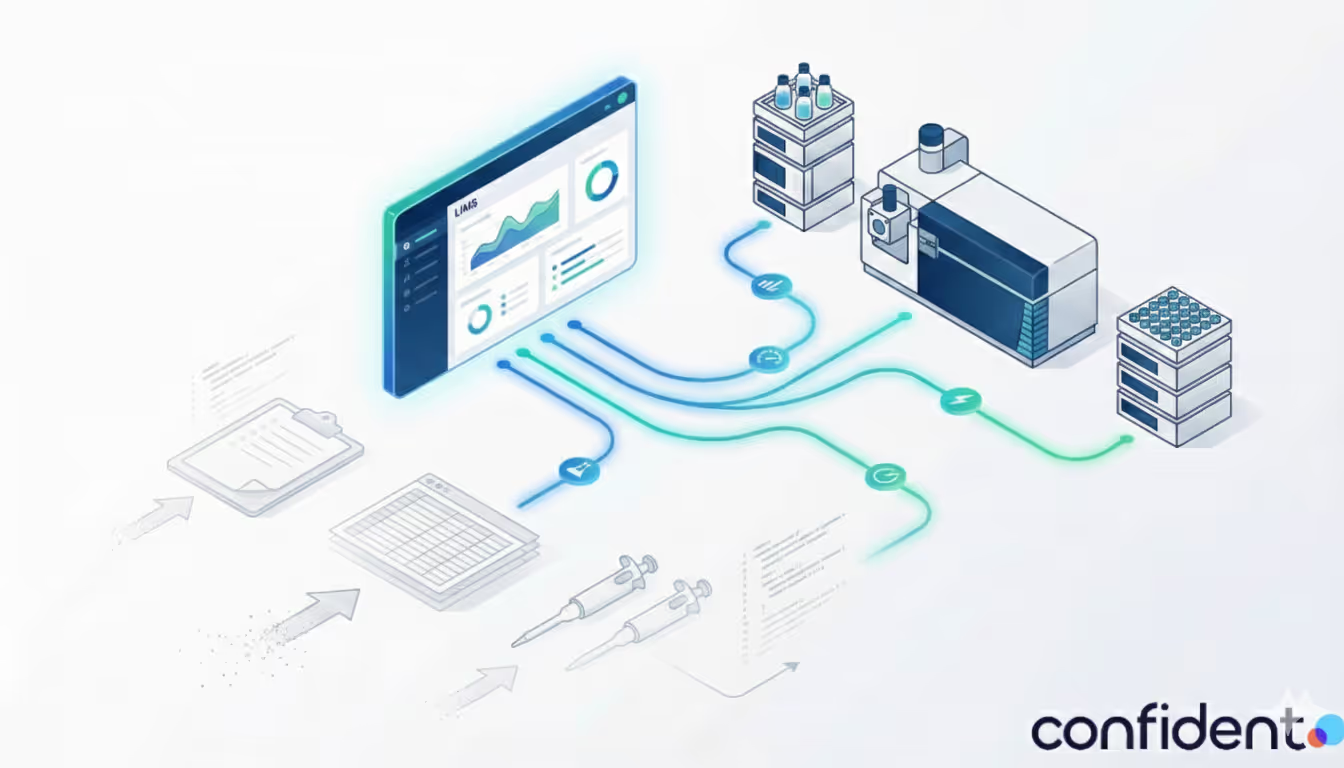

The return on investment (ROI) of a Laboratory Information Management System (LIMS) comes from labor savings, faster sample processing, fewer compliance errors, and reduced audit risk. Most regulated laboratories see ROI within 12–24 months by automating manual workflows, improving data integrity, and scaling operations without adding headcount.
For years, laboratories viewed LIMS as a necessary cost of doing business—software required for compliance, but not growth. That mindset no longer holds. In 2025, modern laboratories use LIMS as a strategic tool to reduce operating costs, improve turnaround times, and protect their licenses in increasingly regulated environments.
Whether you operate a cannabis testing lab, a biotech facility, or an environmental laboratory, a well-implemented LIMS pays for itself by eliminating inefficiencies, reducing risk, and enabling scale.
Cannabis testing is one of the most tightly regulated areas of analytical science. Labs must comply with state-mandated systems like Metrc or BioTrack, maintain strict chain of custody, and deliver fast turnaround times to stay competitive.
A cannabis-specific LIMS integrates directly with these seed-to-sale platforms, automatically logging packages, results, and transfers. This removes the need for technicians to manually re-enter the same data across multiple systems.
As a result, labs reduce accessioning time, minimize transcription errors, and remain audit-ready at all times. Many cannabis labs report cutting sample intake time by more than 50%, allowing them to process more samples per day without hiring additional staff. The ROI comes from higher throughput, lower labor costs, and reduced compliance risk—all critical in a license-driven industry.
In biotech and life sciences, speed and reproducibility directly impact research timelines, funding milestones, and regulatory submissions. Managing samples, reagents, instruments, and SOPs across spreadsheets and notebooks slows teams down and increases the risk of errors.
A modern LIMS centralizes sample registration, instrument integrations (such as LC-MS or HPLC), and SOP execution into a single system. Automated workflows ensure experiments follow approved methods, while built-in quality checks flag issues before results are finalized.
By reducing duplicate work and standardizing data capture, biotech labs shorten experiment turnaround times and improve data integrity. This not only accelerates research and production workflows but also simplifies audits, partner reviews, and regulatory filings—delivering ROI through both speed and quality.
Environmental testing labs operate under continuous oversight from agencies such as the EPA and must meet standards like ISO 17025 and NELAP. Documentation gaps, inconsistent chain-of-custody records, or delayed corrective actions can quickly lead to non-conformities.
A LIMS streamlines chain-of-custody tracking, automatically captures instrument data, and generates standardized reports for regulators and municipal clients. Corrective actions and method versions are documented within the system, making audits far less disruptive.
For many environmental labs, tasks that once took days—assembling reports or responding to audit findings—can be completed in hours. The ROI is realized through reduced audit preparation time, fewer findings, and improved client confidence.
Spreadsheets, paper logs, and home-grown databases may seem inexpensive, but they create significant hidden costs. Manual record-keeping consumes staff time, increases the likelihood of transcription errors, and makes it difficult to meet evolving regulatory requirements.
National research workload surveys consistently show that scientists spend a substantial portion of their time on administrative tasks rather than scientific work. The Federal Demonstration Partnership Faculty Workload Survey found that approximately 42% of federally funded researchers’ time is spent on administrative and compliance activities, not research itself.
Legacy systems compound this burden. Missing audit trails, incomplete method histories, or delayed reports can slow client deliverables, trigger regulatory findings, or even jeopardize licenses and accreditations.
In contrast, a modern Laboratory Information Management System (LIMS) automates repetitive tasks, enforces data integrity, and centralizes compliance records—freeing laboratory teams to focus on high-value scientific work.
While ROI varies by lab type, the most common drivers include:
Together, these gains allow many labs to recover their LIMS investment within one to two years.
Most laboratories begin seeing measurable ROI within 6–12 months through labor savings and faster turnaround times. Full payback is often achieved within 12–24 months.
No. Small and mid-sized labs often see ROI faster because automation replaces manual processes earlier and reduces dependence on key personnel.
Yes. By maintaining audit-ready documentation, enforcing SOPs, and preventing data integrity issues, a LIMS significantly reduces the time and cost associated with audits and regulatory findings.
Yes. By increasing throughput and standardizing workflows, a LIMS allows labs to process more samples and projects without proportional increases in staffing.
A modern LIMS is no longer just a compliance tool—it is a strategic investment in efficiency, scalability, and risk reduction. For cannabis, biotech, and environmental laboratories alike, the ROI comes from doing more work, with fewer errors, and less administrative burden.
If your lab is still relying on manual systems or legacy tools, the real question is no longer “Can we afford a LIMS?”—it’s “Can we afford not to have one?”
Ready to see how Confident LIMS delivers measurable ROI for regulated laboratories?
Schedule a demo to explore real workflows tailored to your industry.
Let's share!
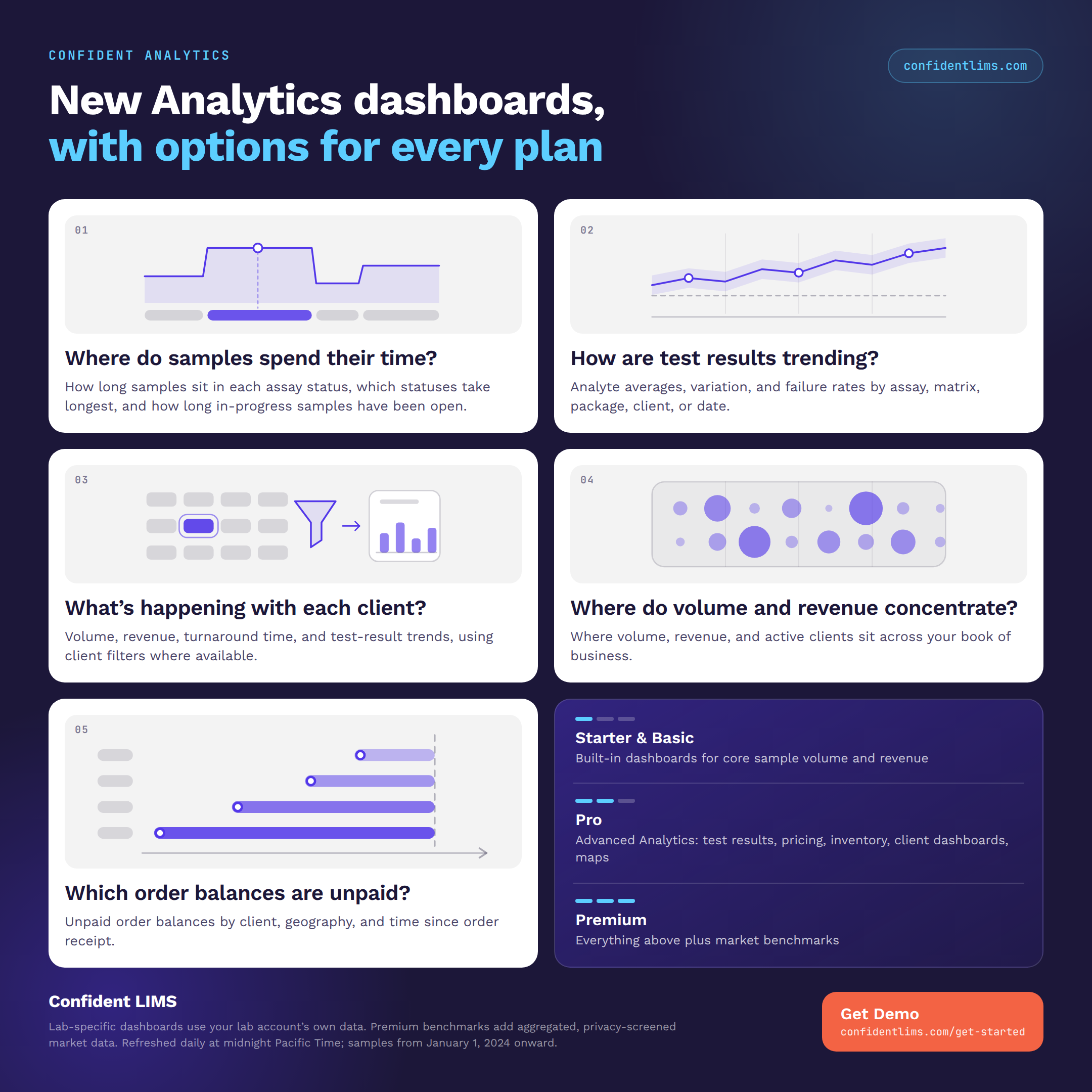
New Analytics dashboards in Confident LIMS: turnaround time, test-result trends, client activity, benchmarks, unpaid order balances. Options on every plan.
READ MORE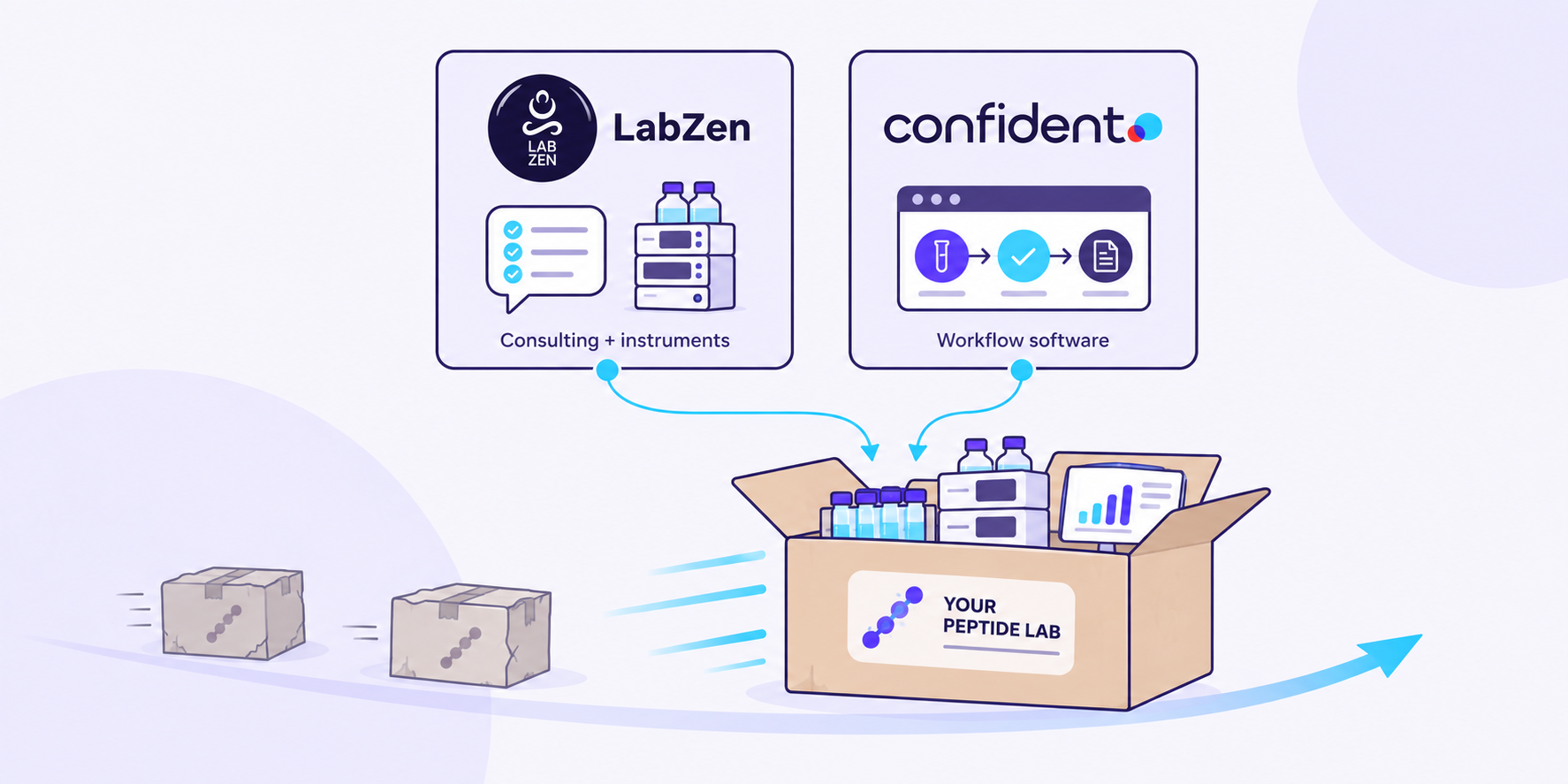
Confident LIMS and Lab Zen are partnering to help peptide labs plan instruments, methods, and the sample-to-COA workflow together.
READ MORE
Analytics dashboards are now live in the Confident Client Portal: free Volume dashboards for everyone, plus 19 advanced dashboards for Client Pro.
READ MORE


